
It’s Alive!
 Monday, July 9, 2007 at 05:51PM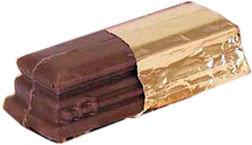
Quote: “Die, N-word. We don’t want to see you around here no more.” Detroit Mayor Kwame Kilpatrick.
Figure of Speech: tabooism, a form of circumlocution. From the Tongan tabu, meaning “forbidden.”
At the National Association for the Advancement of Colored People’s national convention, horses drew a carriage with a pine casket. Inside the casket was the anthropomorphically embalmed word “nigger.”
Did Figaro just offend you? Forgive him; he has a reason.
The word “nigger” didn’t become a bad word in America until the nineteenth century, when it took on pejorative connotations. Derived from the Latin niger, meaning “black,” it allows Figaro to demonstrate a perfect tabooism — a word or phrase that substitutes for a forbidden word. Figaro devised the term “tabooism” himself, because circumlocution is too broad to describe the phenomenon.
A circumlocution (or periphrasis, as Figaro’s Greek homeys called it) swaps an unpleasant word or phrase with a description. (Bodily waste for doo-doo, significant other for “guy I’m shacking up with”.) A tabooism does the same thing, except that it substitutes only for words imbued with scary powers: Adonai for Yahweh, gee for Jesus, He Who Must Not Be Named for Voldemort, and the F-word for, well, you know.
Of course, one of the best ways to give a taboo more power is to ban it. By burying the N-word, the NAACP may actually turn it into one of the Figuratively Undead.
WTF?
Snappy Answer: “S’up, person of color?”
Reader Comments (5)